
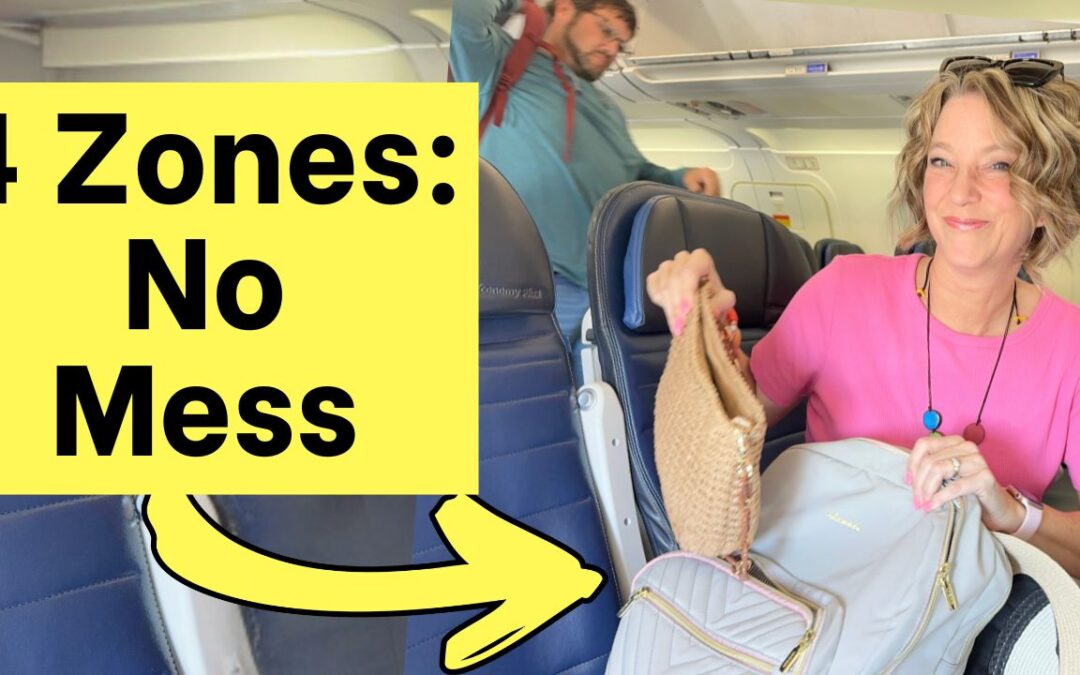
The difference between a stressful flight and a seamless one often comes down to the six inches of space under the seat in front of you. Most travelers treat their tote bag like a catch-all junk drawer, but for me as a frequent flyer, this bag is a strategic command center.
Here are 4 of my specific systems that keep essentials protected, accessible, and perfectly organized from takeoff to touchdown.
Phase 1: The First-Access Zone (Top Layer)
The secret to a stress-free flight is organizing based on when the item is needed. You should never have to hunt for an item in a dark airplane cabin.
Instead of packing from the ground up, let’s organize by zones. It will help you pack less while staying organized too.
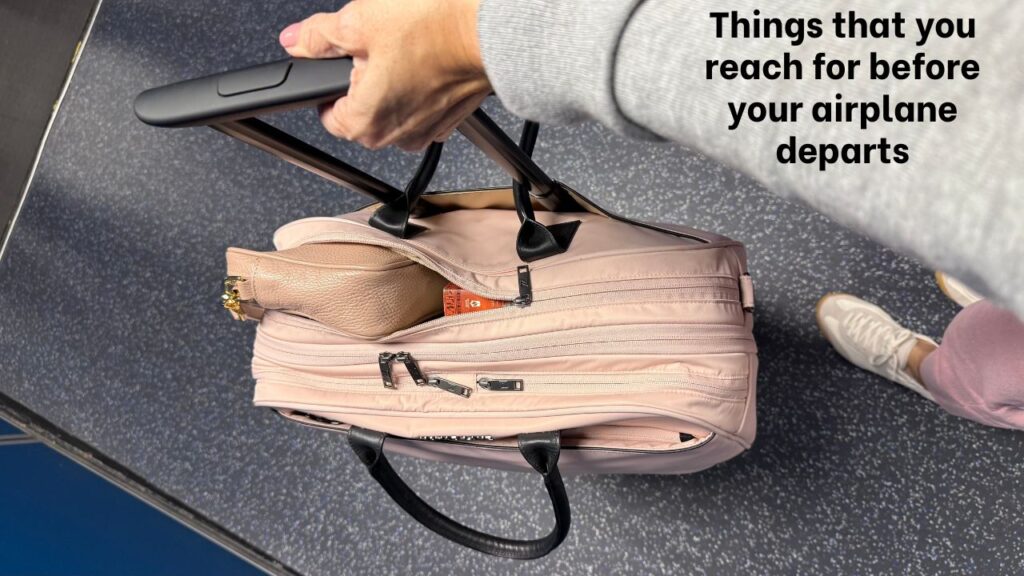
Your top layer—the “First-Access Zone”—should contain the items you’ll reach for before the wheels even leave the tarmac.
This is where your TSA-compliant clear pouch lives in case they need to see it in airport security, alongside your wallet or phone for easy access to your boarding pass and ID.
Phase 2: The Core Infrastructure (Middle Layer)
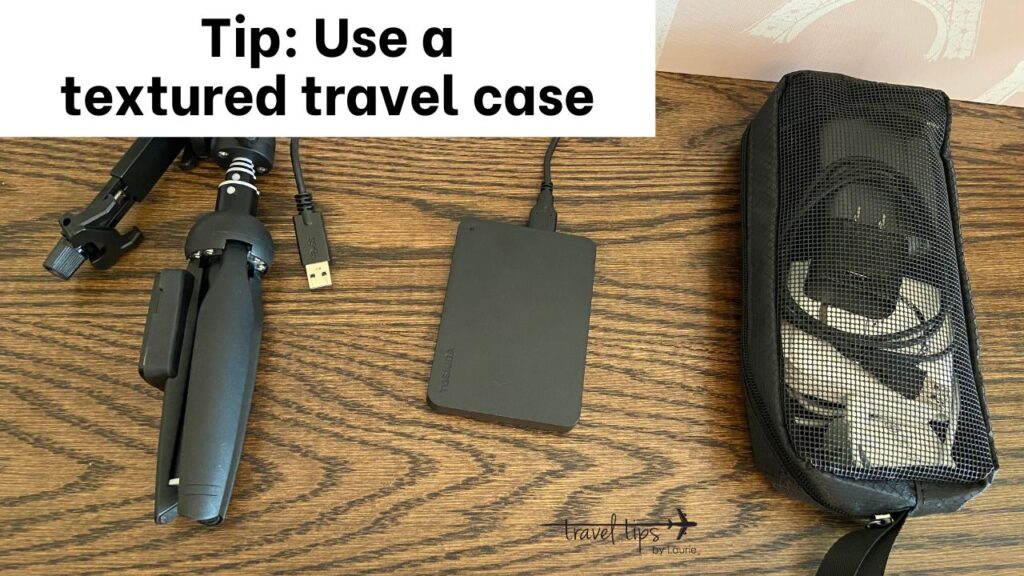
To maximize space while ensuring you have everything you need, stop thinking about “packing” and start thinking about zone’s function. Instead of letting items float freely, invest in small packing cubes to categorize your gear.
I don’t mean to pack everything in a packing cube, but think of a travel case for each group of items.
Use cord organizers or small zippered bags, even a pencil case, to keep charging cables instantly retrievable.
Travel tip: My AirPods do not get packed with my travel cords because they go in my in-flight pouch.
Phase 3: The Extras Zone (The Suitcase Extension)
For those skeptical of organization, here is where the strategy pays off: treat your under-seater as a strategic extension of your suitcase. If there is extra room, don’t just fill it with “stuff”—fill it with a contingency plan.
Pack one more compression packing cube at the very bottom. Inside, keep 2 pairs of undies, 2 tops, and a pair of socks in case your checked bag goes missing.
But here is the pro-traveler hack: that compression cube doubles as lumbar support for those notoriously uncomfortable airplane seats, or even as a pillow for an all-night flight. It’s a multi-functional tool that provides comfort during the flight and peace of mind upon arrival.
One question to ask yourself: Is there another cube I can take out of my suitcase to pack in my personal item bag?
Many of my viewers need a cushion so if you know of a high quality inflatable, let us know in the comments.
Phase 4: Safety and TSA Compliance
Packing liquids is usually a pain point, but we still have to be compliant. However, most travelers do not have to take it out anymore, since their technology has gotten better.
My travel tip is to move your liquids bag to your luggage after security, and here is how.
As it’s been an hour maybe, your luggage essentials have settled with the creation of gravity. When you open your suitcase, you can 99% of the time fit your liquids bag now in your suitcase.
To keep personal items secure from theft, utilize the internal zippered pockets of your tote for your valuables. When you arrive, having a dedicated spot for everything makes repacking at your destination a 30-second task rather than a chore.
Hopefully, these travel tips showed you ways to transform your bag from just a “holder of things” into a functional piece of flight equipment.