
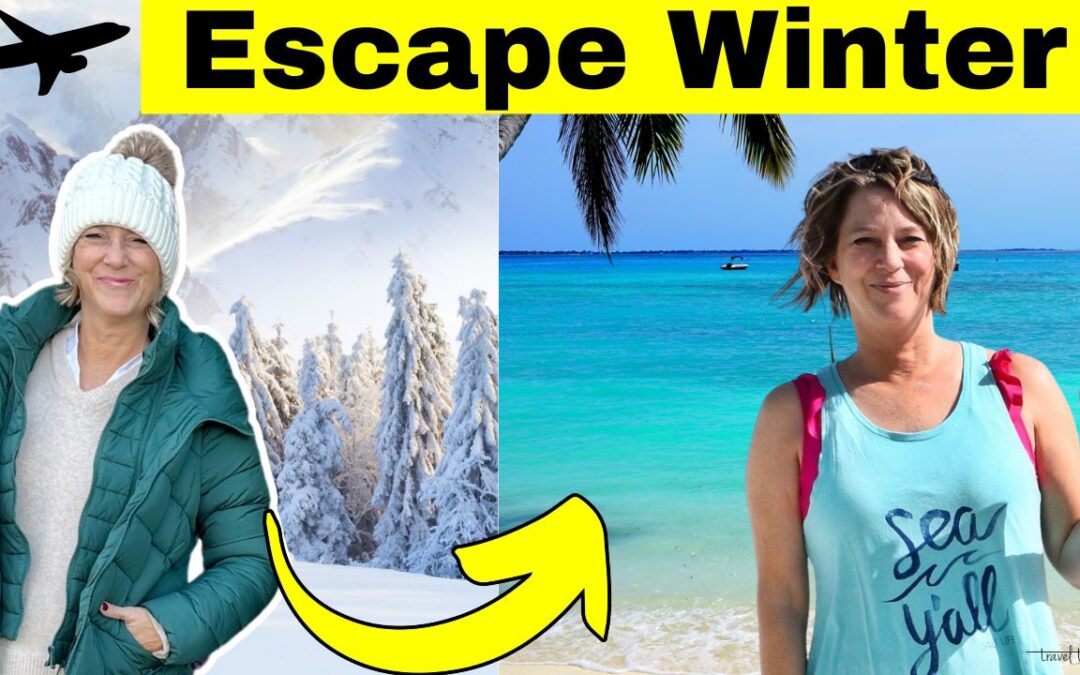
When packing for a trip that spans two completely different climates, the challenge is fitting everything into a single carry-on without feeling unprepared for either the snow or the sand.
As a pilot’s wife, I have learned that the key to mastering this transition begins with a straightforward yet intelligent departure strategy. If you are leaving a freezing home for a tropical destination, some of these travel hacks are just for you!
I get asked this question more than almost any other, so today I am sharing the exact formula I follow to travel from cold to hot without ever checking a bag.
Phase 1: The Night Before Zone
Mastering the two-climate carry-on starts with how you organize your bag before you even zip it shut. You want to utilize a “Zone Packing” method, where your arrival clothing is sitting right at the very top zone. If you are heading to the beach, your swimsuit and a swim cover-up should be the first things you see when you open your bag.

This next part of my Phase 1 formula is where you lean into high-performance fabrics.
We will swap out thick bulky clothing.
Outfit Swaps:
- I highly recommend lightweight merino wool t-shirts because they wick away moisture. And they are not hot! Or if you live in Canada and have a base layer thin thermal type shirt, wear that to the airport and use the upcoming packing hack.
- Linen regulates your body temperature. Wear a linen scarf that can be worn as a sarong at the beach resort.
- In transit to the airport, wear cashmere because this outer layer retains your body warmth while also regulating your body temperature.
As a woman over 50, I need my body temperature regulated often! The trick is that cashmere keeps you warm without creating bulk to pack or wear. It, along with that merino wool tee or base layer shirt) is so lightweight and breathable, it’s easy to stow them in your personal item when you land.
Do this travel hack switch at the airport: Pack an EMPTY compression cube.
Use that compression packing cube to shrink your bulky items, like a sweater you wore to the airport or a thin down jacket, into a cube or its attached bag.
But you prepared for that airport switch by packing that empty one.
New for the year 2026 is this Ekster vacuum no-vacuum cleaner compression travel tool. I packed my hooded winter vest, Asymmetrical sweater, and other winter outfits in this cube. Just zip it and tap the switch to vacuum seal this bag so that it fits in one side of my carry-on luggage.
Another Night Before Zone is Liquids
This tip sounds easy, but you should maximize your sunscreen by having every family member carry as many travel-sized tubes of sunblock in their own TSA liquids bag.
Phase 2: Departure Day
On the day you leave, your outfit is your most important piece of luggage. You should wear your heaviest shoes, like a hybrid waterproof sneaker, which works for a rainy hike or a dinner if they match your slacks.

Since we want to dress strategically in the airport and airplane seat, here is one tip:
- Choose travel outfit pieces in a consistent color scheme to ensure that my merino wool tee coordinates with other vacation outfits.
If you are leaving a cold climate for the heat, leave your heavy down jacket in the car and wear a thin packable puffer or a very lightweight but cashmere poncho instead. It folds up so easily!
You may be skeptical, but you aren’t going “coatless.” You are using a “high-performance shell” or a packable puffer that layers over a base layer. It is a swap with almost the same warmth as a bulky wool coat but fits in a tote bag.
Choose items that are easy to tuck away once you get to the gate.
I keep a plastic bag in my jacket pocket. Once you board, roll your jacket into that bag and slide it into the overhead bin or under your seat to keep it clean. This phase is all about staying streamlined, so choose a personal item bag with a dedicated “Arrival Zone” pocket where you can stash your immediate change of clothes, like a pair of shorts or flip-flops, for a quick swap later.
I have packed a pair of shorts between the sides of my carry-on and changed into them at the rental car restroom in Hawaii.
Phase 3: At 35,000 Feet (The In-Flight Reset)
The airplane cabin is the neutral zone between your two climates, and it is the best place to prepare your body for the shift.
Wear compression socks to keep your circulation moving. I love Dr. Scholls that look like business socks. But now I have some cuter ones that keep my legs healthy.

My tip is start with mild or compression that starts with 15 mmhg. If you have circulation issues, talk with your doctor or nurse first!
This is also the time to utilize that cashmere poncho as a cozy blanket if the cabin gets chilly.
2 travel hacks for a poncho:
- Turtleneck look- pull it all forward, so you can wear a winter jacket with it or
- Scarf poncho
- Stick your arm through the poncho’s hole, making one long shape. Then take the entire long shape behind your neck and stick one in through the hole, making a cozy scarf.
The most important step happens about forty-five minutes before you land. Take your “Arrival Zone” kit to the lavatory for a pre-landing wardrobe swap. By changing into your lightweight top before you ever step off the plane, you avoid the discomfort of walking through a humid transportation exit terminal in the wrong clothes.
In the airplane lavatory, you could even put on a dress that you can wear with your sneakers if you did not want the linen scarf or poncho.
Phase 4: The Tarmac Touchdown (The Final Layer)
As the plane taxis to the gate, you should be the most prepared person on the aircraft. While everyone else is scrambling to find their coats or is still wearing long-sleeve sweaters in the terminal, you are already dressed for the local weather.
All your departure climate layers are tucked into the empty compression cube.
Strategic Shoe Solutions
Hybrid shoes like my Wrapt ones can be helpful for both winter temperatures or the beach resort excursions.
But one tip is to remember that it’s been a while since you have worn sandals so pack waterproof stretchy bandages by Dr Frederick to be prepared for blisters.

Another resort tip is that is mostly tile and large space so have solid support for comfort.
You may want to pack high heels, but in order to save space, consider ballet flats. Add a fancy hair clip to give them some bling.
By following this blueprint, you aren’t just saving space in a suitcase; you are eliminating the stress of the transition. You can walk straight off the jet bridge and start your vacation immediately, knowing you have everything you need for both the snow and the sand right there in your hand.